
Publikumsjoker
Publikumsjoker
Publikumsjoker
16th of February 2026 – 8 p.m. Hackesche Höfe Kino
Films:
BEAUTIFUL AND NEAT ROOM
HUGS & KISSES
Debate Format: PUBLIKUMSJOKER
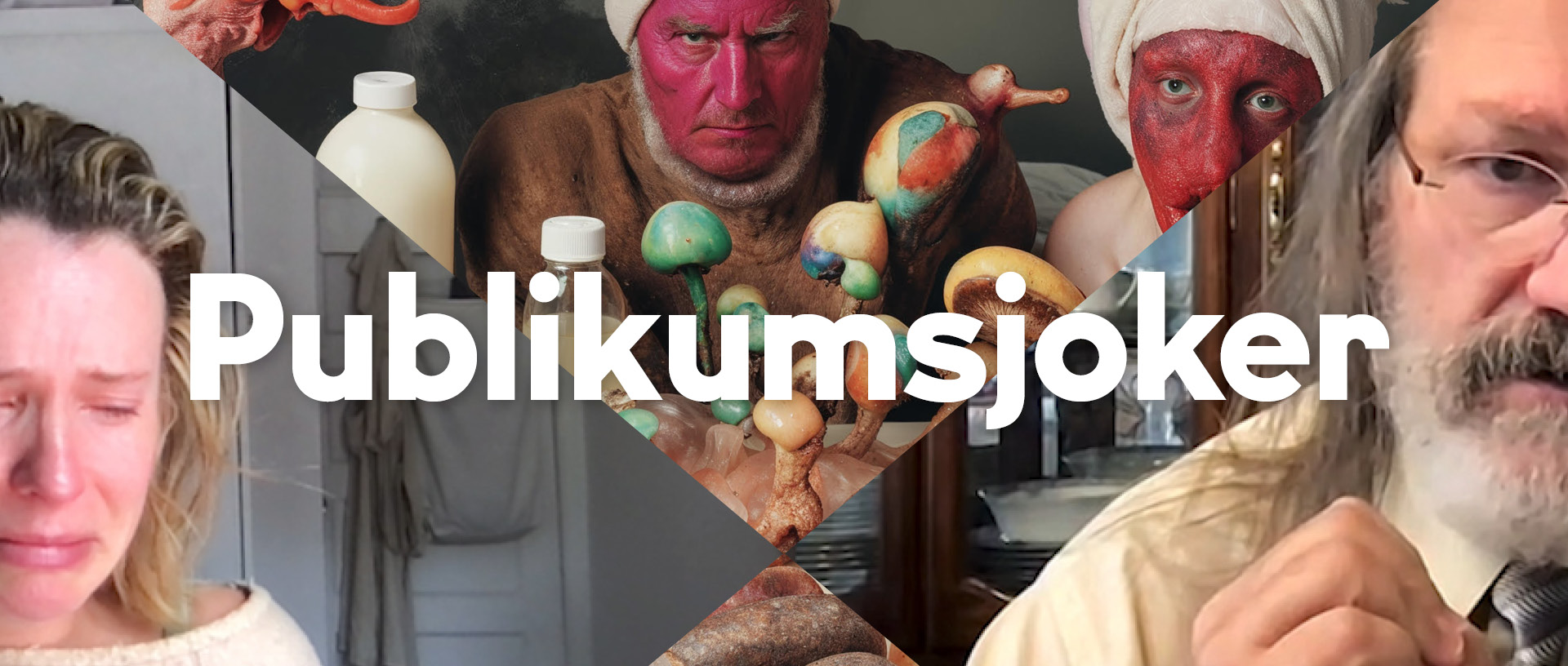
The audience is key: In this discussion format, one person from the audience is selected at random to discuss the evening’s films with the filmmakers and/or guests – and can also seek help from other audience members.
Debate guests include: Maria Petschnig, Marc Richter
Moderation: Dennis Vetter
BEAUTIFUL AND NEAT ROOM
D: Maria Petschnig, C: Charlotte Aubin, Ari Brand, Adam Ratcliffe, Marc Bracich, DOP: Jamal Solomon, AUT/USA 2025, 118 Min., English Original – German Premiere
People who live in New York don’t leave rooms empty, as that would be too expensive. At least, that’s how the Franco-Canadian artist at the center of Maria Petschnig’s film sees it— she’s certainly not looking for a subtenant out of charity. However, in casting the ideal person for the cohabitation of least resistance, her lack of knowledge of human nature repeatedly gets in the way. Petschnig never for a second gives the impression of making a cozy humanistic appeal for social justice in the face of gentrification. Instead, she unfolds with great consistency a bitingly absurd comedy about artist clichés, human neuroses, and eccentricities within the confined space of the apartment.
Maria Petschnig (born 1977) is an Austrian-born, New York City-based artist and filmmaker whose work explores themes of memory, voyeurism, and eroticism through video art, experimental film, and narrative cinema. Known for her psychologically charged and often uncomfortable imagery, Petschnig challenges viewers’ perceptions of intimacy and spectatorship. Her work has been exhibited internationally, including at MoMA PS1, and reviewed by major publications such as The New York Times, Artforum, and Art in America. In 2021, she released her first documentary, UNCOMFORTABLY COMFORTABLE, which follows a homeless man living in his car in New York City. The film premiered at the Duisburger Filmwoche and won the ARTE Documentary Award. Her narrative feature BEAUTIFUL AND NEAT ROOM (2025), inspired by her own experiences living with over 60 roommates, won the Grand Prix at the Split Film Festival. As she told The New York Times, sharing her apartment was “a way to survive as an artist in New York City.” Petsching’s film work has been showcased by a variety of international art fairs and film festivals, including the International Film Festival Rotterdam and Anthology Film Archives in New York.
HUGS & KISSES
D: Neue Deutsche Kunst/Marc Richter, GER 2025, 11 Min., no dialogue
For HUGS & KISSES, Marc Richter, alias Neue Deutsche Kunst, fed surreal texts and confusing commands into the input fields of AI programs. The result was a mélange of psychedelic, offbeat images and music, which Richter condensed into a film that’s both strange and tender. Against the free-flowing score, the boundaries between colorful objects melt away with sensual joy, and slowly new beings begin to approach each other. “Hugs and kisses” are indeed in the air. Alienation and affection touch in the realm of possibility between human creativity and artificial intelligence. An inventory of the current state of Germany?
Marc Richter (born 1968) is a Hamburg-based multimedia artist and composer. Working under the label “Neue Deutsche Kunst”, he produces his own work and also supports other artists who share a similar aesthetic, blending German art traditions with modern electronics and pop culture. Richter, also known for his musical project Black To Comm, operates at the intersection of visual art, curatorial practice, and music. He explores the limits of AI software by confronting it with surreal, overloaded, and often contradictory tasks and information. Within visual frameworks of Richter’s own design, the AI attempts to interpret these inputs, generating hallucinatory, lysergic artworks and films. His work is shaped by a melancholic, surreal atmosphere influenced by German folklore, early video art, Actionist performance, psychedelic culture, experimental music, and the writings of Angela Carter and J. G. Ballard. In 2024, he won the MuVi Award at the International Short Film Festival Oberhausen and published his first artist’s book.