

Talking about films: an overview of the debate formats
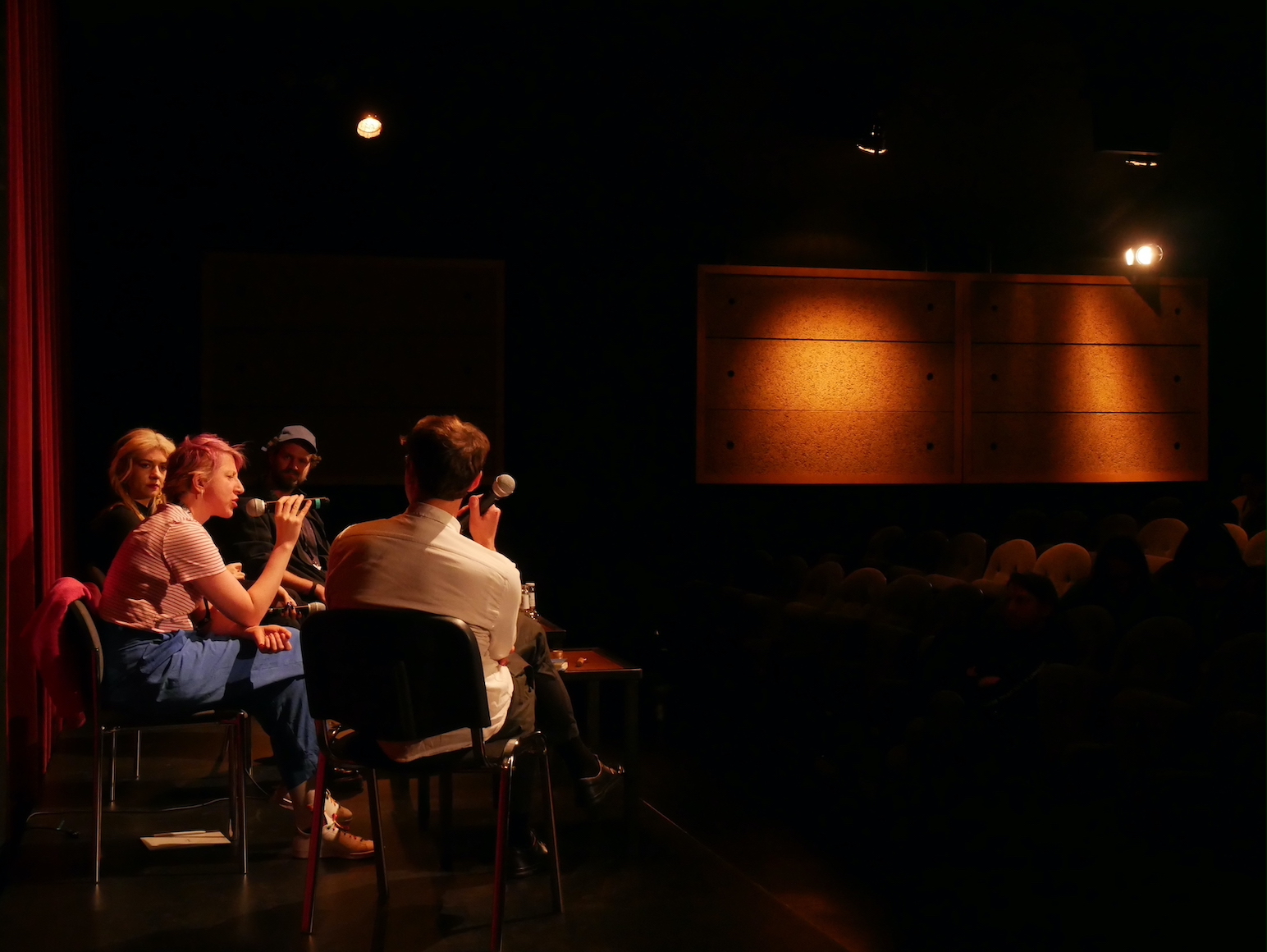
How do we talk about cinema? What are the rules that govern such discussions? And what happens when we change them? This year, Critics’ Week is once again working with different debate formats, seeking to break with the conventions of the classic Q&A and try out new ways of talking about films.
Since Critics’ Week was founded twelve years ago, the debates that follow every screening have been just as essential to the festival as the films themselves. This has a lot to do with an observed dissatisfaction within film culture: the classic festival Q&A, as it still takes place at the vast majority of screenings, follows a standardized procedure that leaves little room for honest reactions, spontaneity, and surprises, and tends to foreclose in-depth debate or critical discussion. From the outset, Critics’ Week therefore sought to create a space that, operating beyond the pragmatic and economic constraints of traditional festivals, would enable lively discussion while also allowing for disagreements.
We have always viewed Critics’ Week as a workshop through which to develop new ways of talking about film. Since last year, we have pursued this aspect even more wholeheartedly, developing different debate formats—because we are convinced that it is not enough to simply replace one convention with another. After all, talking about film can be as multifaceted as the medium itself. Discussions that might start from one point can lead to completely different places. Last but not least, we want to consciously choose different starting points and deliberately make transparent the rules that film discussions often implicitly follow.
In doing so, we pursue unconventional conversational roads and incorporate performative formats. For 2026, we want to repeat a debate format that proved very popular last year: in the HALBWISSEN format, the evening’s guests are put into conversation with a moderator who has neither met them nor seen the evening’s film, and so must first have the film described to them. Consequently, the guests cannot start analyzing the film right away: they must first agree on what they have just seen.
We also want to bring back three other formats from the 2025 edition: In RUDELKRITIK, we bring together a group of film and cultural critics to discuss the evening’s films in a moderated conversation, while the filmmakers remain in the audience. The debate in the REAKTIONSZEIT format, by contrast, is divided into two parts: first, the guests and the audience discuss the evening’s films together, before the filmmakers are then allowed to join the debate and respond to what has been said. We are also bringing back the STEILVORLAGE format from last year, but with a conceptual change: from now on, a selection committee member will join the filmmakers on the panel—for a debate that focuses not only on the films, but also on the curatorial process.
This year, for the first time we are trying out a format we’ve dubbed PUBLIKUMSJOKER—in which the audience is part of the debate from the very beginning, rather than just at the end. After the screening, a member of the audience will be selected from a pool of volunteers to take part in the film discussion. This person can also collect questions and comments from their fellow audience members and bring them into the discussion.
It has always been important to Critics’ Week to have guests from various disciplines and professional fields on the podium, rather than exclusively from the film industry. In our new format BRÜCKENSCHLAG, we focus on this aspiration by inviting only guests who do not come from either film criticism or the industry to contribute their perspectives and discuss the evening’s films with their directors.
As we did last year, we will again present all previous and upcoming Critics’ Week debate formats in an online catalog—including last year’s formats TUNNELBLICK and WUNSCHDENKEN, which are not part of this edition but will return in the future. By developing new formats, Critics’ Week sees itself as a catalyst for film culture. Over the years, an archive of discussions about cinema has been built up on both the festival’s website and its YouTube channel. Several international events, such as the recent Semaine de la critique de Montréal and the Argentine film festival Contracampo, have already taken up and extended some of the interdisciplinary debate formats pioneered by Critics’ Week.
Photo: (c) Tabita Nives Hub